
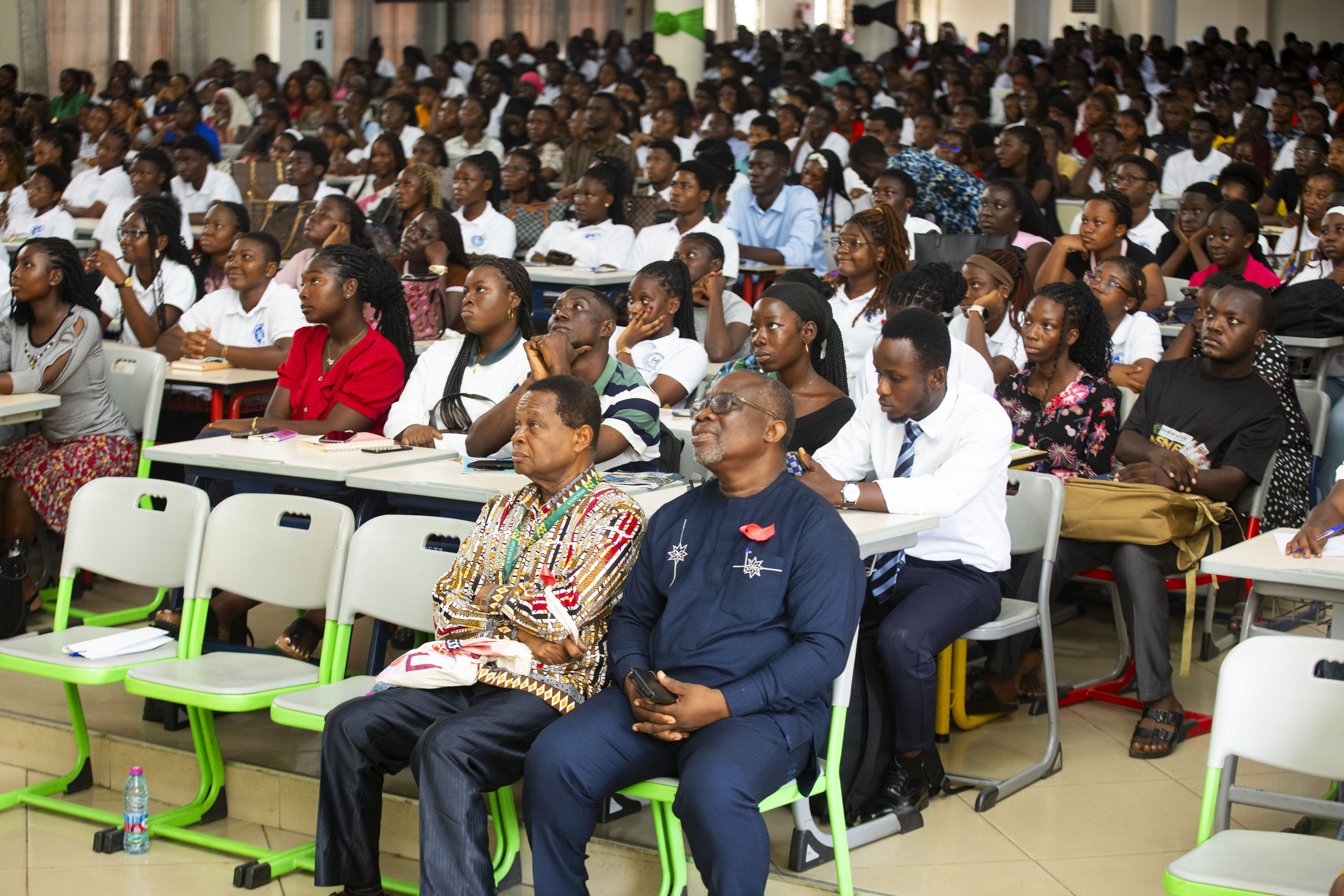
The Faculty of Social Sciences (FoSS) at the Kwame Nkrumah University of Science and Technology, Kumasi (KNUST), has held an orientation programme for first-year students for the 2026/2027 academic year, covering academic expectations, university regulations, examination procedures, responsible use of artificial intelligence (AI) and student support services.
Delivering the welcome address on behalf of the Dean, the Vice-Dean, Professor Samuel Adu Gyamfi, congratulated the students on gaining admission and encouraged them to uphold the university’s tradition of academic excellence and service to society.
He highlighted the faculty’s contribution to understanding human behaviour, social institutions and societal challenges. The faculty has seven departments and offers 50 programmes, comprising 14 undergraduate and 36 postgraduate programmes.
Prof Adu Gyamfi urged students to approach their studies with discipline, curiosity and determination, saying their university education should extend beyond acquiring certificates to developing the knowledge and skills needed to contribute to national and global development.
He advised them to prioritise their academic work, uphold integrity and take advantage of opportunities through student associations, research activities, seminars and community engagement.
The Faculty Registrar, Mr Anthony Kuufare, outlined the university’s administrative and academic structures, explaining the roles of management, faculties, departments and support units.
He urged students to familiarise themselves with the Student Guide and Code of Conduct to understand their rights, responsibilities and the consequences of violating university regulations.
“The general rules apply to everyone, but faculties and departments may also have specific regulations that students are expected to observe,” he explained.
Mr Kuufare cautioned against examination malpractice, plagiarism, unauthorised possession of prohibited items, smoking, drug-related offences, theft and other misconduct. He also stressed the need to comply with the university’s dress code and respect its property.
Violations could attract disciplinary measures ranging from reprimands and suspension to dismissal, depending on the offence, he said.
He encouraged students to obtain official information from the university’s website and relevant administrative offices rather than rely on unverified sources.
The Faculty Examinations Officer, Dr Osei Yaw Akoto, stressed the importance of completing academic, biometric and course registration to maintain valid student status.
He said students must ensure their registered courses reflect their approved major and minor combinations and include the relevant faculty-wide and university-wide courses.
Dr Akoto advised students seeking to change their minor programmes or courses to do so within the stipulated two-week period after registration to avoid missing lectures and other academic activities.
He also reminded them to attend lectures regularly, arrive early at examination venues, carry their student identification cards and familiarise themselves with the university’s grading system and examination regulations.

The university’s AI Coordinator, Professor Eric Appau Asante, introduced a mandatory course on the fundamentals of responsible AI, designed to equip students with the skills to use the technology ethically and responsibly.
He said AI’s growing role in education and the workplace made it necessary for students to understand its applications while remaining mindful of privacy, data protection and academic integrity.
“The question is not whether you should use AI, because you are already using it in one way or another. The question is how we guide you to use it efficiently, ethically and responsibly,” he said.
Prof Asante also highlighted opportunities to access AI tools and additional skills-based courses to strengthen students’ digital competencies.
A representative of the KNUST Counselling Centre, Mrs Joan Soribang, encouraged students to prioritise their mental health as they adjust to university life and its academic demands.
She advised them to manage their time effectively, maintain healthy relationships, eat balanced meals, get adequate sleep and adopt positive ways of managing stress.
She also encouraged students to set clear academic goals, participate in extracurricular activities and seek support when personal or academic difficulties become overwhelming.
“Your main reason for coming to school is to get an education. If you should fall in love, please don’t forget your main reason for coming to the school,” she advised.
Mrs Soribang urged students experiencing emotional or psychological difficulties to seek professional assistance from the Counselling Centre. She assured them that their concerns would be handled confidentially, subject to professional and safety obligations.


